PHASE 3: BUILD THE ROCKET
Flight School taught you the science and the careers. Now you engineer the machine. Phase 3 takes you inside the Artemis Space Launch System — the most powerful rocket ever built — and you assemble it piece by piece. Every bolt, every weld, every wire connects to a real career and a real person who makes spaceflight possible.
Assemble the Artemis SLS — the most powerful rocket ever built. 6 stages. Real engineering. Your rocket.
START BUILDING →BUILD THE ROCKET MODULES

"We choose to go to the Moon in this decade and do the other things, not because they are easy, but because they are hard."— President John F. Kennedy, 1962

The Tsiolkovsky Rocket Equation — the single most important formula in spaceflight. It says that the speed a rocket can reach depends on two things: how fast the exhaust leaves the engine (exhaust velocity) and the ratio of the rocket's total mass to its empty mass. Think of it like a backpacker on a long hike: the more food and water you carry, the heavier your pack, which means you burn more energy just carrying the supplies. Rockets face the same problem on a massive scale. The brutal truth? Rockets are roughly 90% fuel. The payload — the thing you actually want to send to space — is a tiny fraction of the total weight. Imagine filling a school bus with fuel and only having room for one textbook as cargo. That is basically the rocket equation.
Thrust-to-weight ratio — a rocket must produce more thrust than its own weight or it does not leave the ground. Period. Think of it like trying to do a push-up: your arms have to push harder than your body weighs, or you stay on the floor. The SLS produces 8.8 million pounds of thrust against a weight of 5.75 million pounds, giving it a thrust-to-weight ratio of about 1.53. Anything below 1.0 and the rocket sits on the pad like someone who skipped arm day trying to push up a truck.
Staging — why do rockets throw pieces of themselves away? Because dead weight kills missions. Once a fuel tank is empty, it is nothing but dead mass that the remaining engines have to push. Imagine running a race while carrying empty water bottles — you would toss them the moment they were empty to run faster. Dropping spent stages is the only practical way to beat the rocket equation. The SLS uses two solid rocket boosters (dropped at 2 minutes), a core stage (dropped at 8 minutes), and an upper stage that pushes Orion to the Moon.
Propulsion types: Solid rockets (simple, powerful, cannot be shut off once lit — the SRBs) are like a Roman candle: once you light the fuse, it burns until it is done. Liquid rockets (throttleable, restartable, complex plumbing — the RS-25 engines) are more like a gas stove: you can turn the flame up, down, or off. Hybrid rockets combine solid fuel with liquid oxidizer, splitting the difference. Each type has trade-offs in thrust, control, cost, and safety.
Max-Q — maximum dynamic pressure. About 80 seconds after launch, the rocket hits the point where aerodynamic stress is highest — moving fast through still-thick atmosphere. Think of sticking your hand out a car window at highway speed and feeling the air push back hard. Now multiply that by a rocket going 1,000+ miles per hour through air that is still thick enough to punch back. The vehicle must survive this moment or it tears apart. Engineers design every structural element around Max-Q.
Thermal protection — friction heating during ascent can reach thousands of degrees. The rocket equation is tyrannical: every pound of thermal shielding you add requires exponentially more fuel to carry it, which requires more structure to hold the fuel, which requires more fuel to lift the structure. It is an endless spiral — like trying to save money for a trip but every dollar you save costs you fifty cents in fees.
👩🚀 Ask Maria for more detail…🔧 Interactive Module
Experience rocket engineering hands-on:
🔧 Rocket Assembly Builder — Assemble the SLS Stage by Stage →Water Rocket Lab
Build a simple water rocket using a plastic bottle, a cork, and a bike pump. The water is your propellant mass — it gets expelled downward, pushing the rocket upward (Newton's Third Law meets the rocket equation).
Experiment: Launch the rocket with 1/4, 1/2, and 3/4 water fill. Measure flight height each time. Graph your results. You will discover the optimal fuel fraction — too little water means not enough reaction mass, too much water means too heavy to accelerate. This is the rocket equation in a bottle.
Alternative: Inflate a balloon, tape it to a straw threaded on a string. Release. Measure distance. Try different balloon sizes (fuel mass). Record and graph results.

"When something is important enough, you do it even if the odds are not in your favor."— Elon Musk, on reusable rockets

The 6 Major SLS Components — every piece must work perfectly or the mission fails:
The 380-foot launch tower. Holds the rocket upright, supplies power, fuel, and data connections until the moment of liftoff.
Two 177-foot boosters providing 75% of liftoff thrust. Once ignited, they cannot be shut off. They burn for 126 seconds then separate.
The 212-foot orange backbone. Holds 733,000 gallons of liquid hydrogen and oxygen. Powers four RS-25 engines for 8 minutes.
Interim Cryogenic Propulsion Stage. One RL-10 engine that fires after core stage separation to push Orion toward the Moon.
The crew capsule. Holds 4 astronauts. Includes life support, navigation, heat shield for re-entry at 25,000 mph.
The escape tower on top. If anything goes wrong in the first 2 minutes, it pulls the crew capsule away from the exploding rocket in milliseconds.
Integration testing — how do you test a vehicle that only flies once? Think of the SLS core stage like the backbone of a human body — it connects to everything, supports the whole structure, and if it fails, nothing else matters. You test every component individually, then test them connected, then run thousands of simulated countdowns. The Vehicle Assembly Building (VAB) at Kennedy Space Center is where SLS gets stacked. It is one of the largest buildings on Earth — so big that clouds can form inside it on humid days. Originally built for Saturn V, now serving Artemis.
Stacking sequence: Mobile Launcher rolls out first. SRBs are stacked segment by segment (each segment weighs 300,000 lbs — about as heavy as two blue whales). Core Stage is lifted and mated to the boosters by crane. ICPS goes on top. Orion capsule with LAS crowns the stack. Total stacking time: weeks of precision work. Imagine building a 30-story building, but every floor has to connect perfectly to every other floor on the first try — and then the whole building has to fly.
Countdown procedures — from "Go for launch" to "Liftoff" involves over 1,000 individual steps. Fueling alone takes 8 hours because liquid hydrogen must be kept at -423 degrees Fahrenheit — colder than anything naturally occurring on Earth. Hundreds of engineers monitor every system. A single anomaly can scrub the launch and send everyone back to start. It is like the world's most complex recipe, where one wrong ingredient means you throw out the whole meal.
👩🚀 Ask Maria for more detail…🔧 Interactive Module
Assemble the SLS yourself:
🔧 Rocket Assembly Builder — Stack All 6 Stages of the SLS →Rocket Assembly Builder
Complete the Rocket Assembly Builder interactive module. You will assemble all 6 stages of the SLS in the correct order, learning what each component does and how they connect. Every stage has a real career associated with it.

For every 1 astronaut who flies, over 10,000 people make the mission possible. Most are not PhDs. Most are in trades and technical careers. Think of it like a professional sports team: the players get the fame, but behind them are coaches, trainers, equipment managers, groundskeepers, medical staff, scouts, and hundreds more who never step on the field. A rocket launch works the same way. Here are the people who build the rocket:
Propulsion Engineers — design and test the RS-25 engines. Each engine produces 512,000 lbs of thrust and must work perfectly every time. To put that in perspective, one RS-25 engine produces more power than all four engines on a Boeing 747 combined. These engineers spend years testing a single engine design before it flies.
Welders — join fuel tank sections that hold cryogenic propellants at -423 degrees Fahrenheit. Every weld is X-rayed and inspected. One defective weld in a tank holding 733,000 gallons of explosive propellant means catastrophic failure. These are among the highest-skilled welders on Earth. The same skills that build a rocket also build bridges, pipelines, and skyscrapers.
Electricians — wire miles of cable through the rocket. If you stretched out all the wiring in the SLS, it would reach several miles — like wiring an entire neighborhood, except everything has to be perfect and every circuit must be redundant (backup systems for backup systems). A single wiring error can cause a short that disables critical systems at the worst possible moment.
Software Engineers — write millions of lines of flight code. The software must handle every possible scenario: engine failures, sensor malfunctions, weather changes, guidance corrections. Unlike your phone apps that crash and restart, flight software gets one chance. There is no reboot at 100,000 feet. If you have ever debugged a school coding project, imagine debugging code where a bug means people die.
Quality Inspectors — check every bolt, every weld, every wire. They have the authority to stop the entire program if something is not right. No schedule pressure overrides quality. They are the referees of rocket building — their call is final.
Machinists — fabricate custom parts to tolerances of thousandths of an inch. That is thinner than a human hair. Many rocket components cannot be bought off the shelf. They are precision-manufactured one at a time on computer-controlled machines that cost more than most houses.
Crane Operators — lift 100-ton rocket components into place inside the Vehicle Assembly Building. Imagine parking a school bus on top of a 30-story building using a remote control — that is the level of precision required. Millimeters of accuracy with objects that weigh as much as a locomotive.
HVAC Technicians — maintain the clean rooms where sensitive electronics are assembled. A single dust particle smaller than a grain of sand can destroy a sensor worth hundreds of thousands of dollars. These technicians keep the environment surgical-grade clean — cleaner than any hospital operating room.
Painters — apply thermal protection coatings that shield the rocket from extreme heat. This is not house paint — it is aerospace-grade thermal protection that must be applied with exact thickness and coverage. Think of it as sunscreen for a rocket, except the "sun" is thousands of degrees of friction heat.
Truck Drivers — move rocket stages across the country. The SLS core stage traveled by barge from NASA's Michoud Assembly Facility in New Orleans to Kennedy Space Center in Florida — a journey of over 900 miles on water because the stage is too big for any road. Specialized transporters move components weighing hundreds of tons.
👩🚀 Ask Maria for more detail…Launch Team Career Research
Choose one specific trade role from the list above (welder, electrician, machinist, crane operator, HVAC technician, painter, or truck driver). Research that career: What training does it require? What does it pay? Where can you find that job in your community — not at NASA, but at a local company? Every skill that builds a rocket also builds bridges, buildings, power plants, and hospitals.
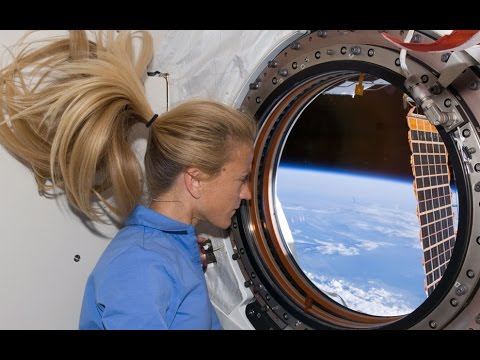
"The Earth is the cradle of humanity, but mankind cannot stay in the cradle forever."— Konstantin Tsiolkovsky, father of rocketry

Every technology built for rockets finds a second life on Earth. The engineering mindset — identify the problem, design a solution, test it, iterate, improve — applies to every challenge, not just spaceflight. Think of the space program as a giant research lab where the inventions leak out and make everyday life better. Your smartphone, your running shoes, your water filter — all of these trace back to space technology.
Lightweight materials — carbon fiber composites developed for rocket fairings are now used in prosthetic limbs, wheelchairs, and surgical instruments. Lighter, stronger, and more precise than anything available before the space program. A carbon fiber prosthetic leg lets an amputee run a marathon — that technology started because someone needed a lighter rocket nose cone.
Thermal protection — heat shield technology from re-entry capsules has been adapted into advanced firefighter gear, building insulation, and protective clothing for industrial workers. The same material that protects astronauts from 5,000-degree re-entry heat now protects firefighters running into burning buildings.
Fuel cell technology — hydrogen fuel cells that powered Apollo spacecraft are now being scaled up for clean energy. Fuel cells produce electricity with zero emissions — the only byproduct is water. Imagine powering your house and getting drinking water as a bonus. That is fuel cell technology.
Precision manufacturing — the machining techniques developed to build rocket engine turbopumps (spinning at 30,000+ RPM with zero tolerance for error) now produce surgical instruments, artificial joints, and dental implants. The same precision that keeps a turbopump spinning without tearing itself apart keeps an artificial hip joint working for decades inside your body.
Clean room standards — the contamination control protocols invented for spacecraft assembly are now the foundation of pharmaceutical manufacturing and semiconductor fabrication. Every computer chip in your phone is made in a clean room that follows standards invented for the space program.
Telemetry systems — the real-time health monitoring systems that track every vital sign of a rocket in flight are the ancestors of remote patient monitoring, allowing doctors to track patients from miles away. Your smartwatch that monitors your heart rate? That concept started with engineers tracking a rocket's "heartbeat" during launch.
Water purification — NASA needed to recycle every drop of water on the Space Station. The filtration systems they developed now provide clean drinking water in disaster zones and developing nations. The same technology that turns astronaut sweat back into drinking water is saving lives in communities with no clean water infrastructure.
Scratch-resistant lenses — NASA needed visors that would not scratch in the harsh space environment. The diamond-hard coating they developed is now on almost every pair of eyeglasses and sunglasses sold today.
Food safety — NASA invented the HACCP (Hazard Analysis Critical Control Points) system to guarantee that astronaut food was 100% safe — you cannot have food poisoning in zero gravity. This system is now the global standard for food safety in every restaurant, factory, and grocery store.
Here is what I tell every student: You do not have to go to space to benefit from the space program. You already do — every single day. The question is not whether space exploration is worth it. The question is: what will the NEXT breakthrough be, and will you be the one to make it?
Engineering Design Process Challenge
Apply the engineering design process to a non-rocket problem in your school or community:
1. Identify — What is a real problem you see? (Broken equipment, inefficient process, unmet need.)
2. Design — Sketch or describe a solution. What materials would you need?
3. Test — How would you test your solution? What would success look like?
4. Iterate — What would you change after testing? How would version 2 be better?
This is exactly how NASA engineers work — the only difference is the scale.

You are in the Launch Control Center. This is the moment everything from Phase 3 converges. Think of it like the final exam — except the exam is happening in real time, the stakes are a multi-billion dollar rocket and a crew of astronauts, and there is no going back once you make a call.
Three crisis layers will challenge everything you know:
Layer 1 — Weather Hold: A storm cell is approaching the launch site. You must calculate launch window timing — how long can you hold before the orbital alignment window closes? The Moon is not sitting still waiting for you; it is moving at 2,288 miles per hour. Miss the window and you wait days or weeks for the next one. This requires the math from Card 3.1 and the systems knowledge from Card 3.2.
Layer 2 — Sensor Anomaly: A temperature reading on SRB segment 3 is outside nominal range. Is it a sensor malfunction or a real problem? This is exactly what happened before the Challenger disaster — engineers saw warning signs and the decision was made to launch anyway. You must use your systems integration knowledge to diagnose the issue and make the hardest call in spaceflight: proceed or scrub?
Layer 3 — Go/No-Go Poll: As Launch Director, you must poll every console position for their status. Every Test Conductor, every Propulsion Engineer, every Software Engineer on console must report. One miscommunication can cause a catastrophic decision. Clear communication under pressure is a skill that separates good engineers from great ones.
Successfully resolving all three layers clears you for launch — and Phase 4: The Journey.
👩🚀 Ask Maria for more detail…🚀 Launch Control Simulation
Three crisis layers. Every skill from Phase 3. One shot at launch clearance.
Enter Launch Control →