PHASE 4: THE JOURNEY
You've built the rocket. Now you're inside it. The journey to Mars takes 7-9 months — longer than any voyage in human history. Every system you learned, every skill you built, every career you explored... this is where it all gets tested.
JOURNEY MODULES
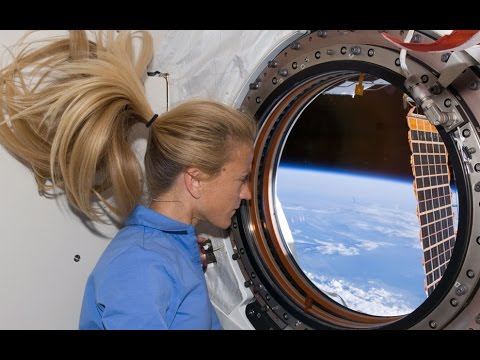
"You develop an instant global consciousness, a people orientation, an intense dissatisfaction with the state of the world, and a compulsion to do something about it."— Edgar Mitchell, Apollo 14, on seeing Earth from space

Getting there is not a straight line. A Hohmann transfer orbit is the energy-efficient curved path from Earth to Mars — like throwing a ball so it arrives where the catcher will be, not where they are now. This is why launch windows only open every 26 months: Earth and Mars must be in the right alignment.
The delta-v budget is the total velocity change your spacecraft needs: accelerate to leave Earth orbit, coast for months, then decelerate to enter Mars orbit. Every kilogram of payload requires kilograms of fuel, which requires more fuel to carry that fuel — the tyranny of the rocket equation.
Communication delay: At its closest, Mars is 3 light-minutes from Earth. At its farthest, 24 minutes one-way. That means a question sent from Mars could take up to 48 minutes for a round-trip answer. When something goes wrong, you cannot call for help. You ARE the help.
Radiation exposure: Outside Earth's magnetic field, cosmic rays and solar particle events bombard the crew continuously. A Mars transit exposes astronauts to roughly 300 millisieverts — about 150 chest X-rays. Shielding, monitoring, and rapid-shelter protocols are critical.
What space does to the body: Bone density loss of 1-2% per month (on Earth, osteoporosis patients lose 1% per year). Muscle atrophy without gravity to work against. Fluids shift toward the head, causing vision changes and increased intracranial pressure. The immune system weakens. Circadian rhythms break down without natural sunrise and sunset cycles.
Think of the Hohmann transfer orbit like throwing a football. You don't throw it to where the receiver IS — you throw it to where the receiver WILL BE when the ball arrives. That's exactly what NASA does with a spacecraft. Earth is the quarterback, Mars is the receiver running a route around the Sun, and the spacecraft is the football. You have to lead the target. If you throw too early or too late, the ball (your spacecraft) sails into empty space with no one to catch it. That's why launch windows only open every 26 months — it's the only time the geometry lines up for a good pass. Miss it, and you wait over two years for the next one.
Communication Delay Experiment
Calculate the communication delay at different points in the journey using the formula: delay = distance / speed of light. At departure (closest approach ~55 million km), the delay is about 3 minutes one-way. At mid-transit (~225 million km), it's about 12.5 minutes. At arrival during far alignment (~400 million km), it's over 22 minutes.
Try it: Send a text message to a partner. Set a timer for the calculated delay. They cannot read it until the timer goes off. Then they reply — and YOU wait the same delay. Have a full conversation this way. How does it change communication?
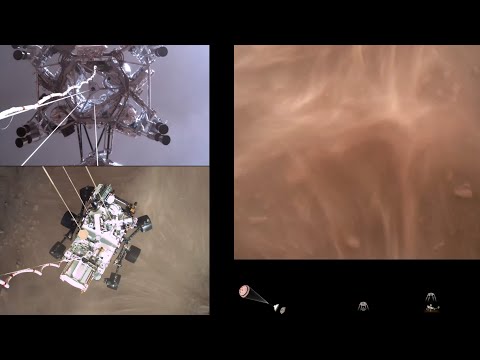
"Mars has been flown by, orbited, smacked into, radar examined, and rocketed onto, as well as bounced upon, rolled over, shoveled, drilled into, baked, and zapped by lasers."— Buzz Aldrin, on humanity's persistent pursuit of Mars

Life support monitoring — the ECLSS (Environmental Control and Life Support System) keeps the crew alive by managing oxygen generation, CO2 removal, temperature (maintained at 18-27°C), and humidity (30-70%). If CO2 rises above 0.5%, crew members get headaches. Above 3%, they lose consciousness. Above 8%, they die. Every reading matters.
Water recycling: The ISS already recovers 93% of all water — including from urine, sweat, and humidity in the air. On a Mars transit, every drop counts. The system processes roughly 3.6 liters per person per day for drinking, plus water for food preparation and hygiene.
Food management: A 4-person crew needs approximately 1.8 kg of food per person per day, totaling roughly 3,800 kg for a 7-month transit. Calorie budgets run 2,500-3,000 kcal/day depending on activity level. Vitamin D supplementation is mandatory (no sunlight). Food variety directly impacts crew morale — monotonous meals erode mental health over months.
Exercise protocols: 2 hours per day, every day, no exceptions. Without it, astronauts return to Earth unable to walk. The regimen combines resistance exercise (ARED machine) and cardiovascular work (COLBERT treadmill, stationary bike). This is the same prescription that prevents chronic disease on Earth.
Medical protocols: No hospital for 300 million miles. The crew medical officer handles everything from dental emergencies to minor surgery, guided by telemedicine with a 4-24 minute delay. Radiation shelter protocols require the entire crew to retreat to the most shielded section of the spacecraft within 30 minutes of a solar particle event warning.
Here's something wild: your body is already a spaceship that recycles water and air. You breathe in oxygen, breathe out CO2. You drink water, your kidneys filter it, and your body reuses most of it before the rest leaves as waste. Your skin sweats to regulate temperature. Your digestive system extracts energy from food and expels what's left. The ISS life support system does the EXACT same thing — just at room scale instead of body scale. The ECLSS collects humidity from the air (your sweat and breath), processes urine, scrubs CO2, and generates oxygen from water through electrolysis. It's literally a mechanical version of your own biology. When you study life support, you're studying yourself.
Personal Life Support Audit — 24-Hour Challenge
Track your own consumption for one full day, using the same categories astronauts monitor:
Water: Measure every glass, bottle, and beverage. Total it up. (ISS limit: ~3.6 liters/day)
Food: Log everything you eat. Estimate calories. (Transit budget: ~2,700 kcal/day)
Breathing: Average resting breathing rate is 12-20 breaths/min at ~0.5L per breath. Calculate your O2 consumption over 24 hours.
Compare: How does your Earth consumption compare to what a spacecraft can provide?

Mission Control — the team on the ground: Every voice you hear during a launch represents years of training and a specific domain of expertise. These roles are not just space jobs — every one of them has a direct equivalent in hospitals, airports, factories, and emergency services.
The crew roles: Commander (leadership and final decisions), Pilot (vehicle operations), Mission Specialist (science and EVA), Payload Specialist (specific experiment expertise). Support careers: Supply Chain Manager, Communications Specialist, Psychologist, Chef/Nutritionist for space food development, Software Engineer maintaining onboard systems.
Every one of these roles exists in your community right now. The hospital has a Flight Director (administrator), a CAPCOM (charge nurse), an EECOM (facilities manager), a Surgeon, and specialists. The fire station, the airport, the factory — the same structure, the same career families.
Let me make the communication delay real for you. Imagine texting your best friend, but every single message takes 24 minutes to arrive — and then their reply takes another 24 minutes to get back to you. A simple "Hey, we have a problem" / "What kind of problem?" / "The CO2 scrubber is failing" / "Try resetting the backup unit" exchange that would take 30 seconds face-to-face now takes nearly TWO HOURS. Now imagine that conversation is happening while alarms are blaring and CO2 levels are climbing. That's why Mars crews have to be trained to solve problems themselves. Mission Control becomes an advisor, not a lifeline. By the time Earth even knows you have a problem, you need to have already started fixing it.
🎤 Go Deeper
Connect your career exploration to hands-on practice:
🎤 Interview Coach — Practice the STAR method for career conversations → 🧭 Career Compass — Where do your strengths align? →Mission Control ↔ My Community
Choose ONE Mission Control role from the list above. Research what that person actually does during a mission (NASA has public console handbooks). Then find the equivalent job in your own community — the person who does the same kind of work in a hospital, airport, school, or fire station.
Bonus: Interview someone in that Earth-equivalent role. Ask: What does a typical day look like? What's the hardest decision you've had to make? How did you get into this career?
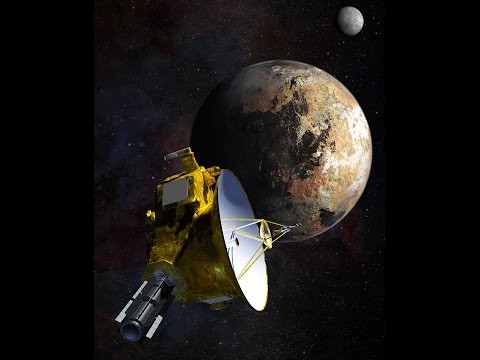
"Look again at that dot. That's here. That's home. That's us. On it everyone you love, everyone you know, everyone you ever heard of, every human being who ever was, lived out their lives."— Carl Sagan, Pale Blue Dot, 1994

Isolation psychology: Antarctic research stations, nuclear submarine crews, and ISS long-duration missions have taught us what happens to small groups confined together for months. The pattern is consistent: initial excitement (weeks 1-4), routine and settling (weeks 5-12), the "third-quarter phenomenon" where conflicts peak and morale drops (weeks 13-20), and renewed energy as the end approaches (final weeks). The MARS-500 study confined 6 volunteers for 520 days to simulate a Mars mission — and found that crew conflicts were the biggest threat to mission success.
🌍 YOU'VE ALREADY BEEN ON THIS MISSION
COVID Quarantine (2020-2021) — The whole planet ran an isolation experiment, and you were part of it. Millions of teenagers spent months confined at home with family, cut off from friends, staring at screens, and dealing with a level of uncertainty no generation had faced before. The emotional stages you went through — the initial novelty of no school, then crushing boredom, then frustration and arguments, then slowly adapting to a new normal — are EXACTLY the stages astronauts experience during long-duration spaceflight. Psychologists call it the same thing: confinement adaptation. If you survived quarantine and came out the other side, you already have spaceflight-grade isolation skills, and you didn't even know it.
College Dorm Life — Imagine sharing a tiny room with a complete stranger who has different sleep schedules, different music tastes, different cleanliness standards, and completely different social habits. Now imagine you cannot change rooms for 7 months. That's a Mars crew habitat. Your roommate leaves dishes in the sink, plays music at midnight, and invites people over when you're trying to study — and the only "outside" you can escape to is a hallway the size of a school bus. Every college Resident Advisor is basically training to be a NASA crew psychologist: mediating conflicts, setting ground rules, and helping people who didn't choose each other learn to live together without losing their minds.
Family Reunions — Everyone is together, nobody chose to be, personalities clash, there's limited space, and you absolutely cannot leave. Uncle Dave won't stop talking about politics, your cousins are being annoying, Grandma is asking intrusive questions, and the WiFi is terrible. Now extend that dynamic to 7 months in a capsule the size of a minivan with no WiFi at all. The skills that get you through Thanksgiving dinner — patience, humor, knowing when to walk away and take a breath, picking your battles, and letting small annoyances go — are literally described in the NASA crew training manual. Astronaut selection boards evaluate candidates on exactly these interpersonal survival skills.
School Lockdown — When a lockdown happens, you're suddenly confined in a small space with people you may not know well. Uncertainty is high. Information is limited or contradictory. Fear is real. Someone has to stay calm, keep the group quiet, and hold things together emotionally until the all-clear comes. That's crisis leadership in a confined space — and it's exactly what happens when an alarm sounds on a spacecraft 150 million miles from Earth. The person who stays calm, communicates clearly, and keeps others from panicking isn't just helpful — they're performing the same role as a spacecraft commander during an emergency. If you've been through a lockdown and kept your composure, you already understand high-stakes confinement.
A Protest That Escalates — Group psychology changes dramatically when stress rises. A peaceful crowd can shift in minutes when fear or anger takes over. Someone needs to de-escalate, communicate clearly, and keep people focused on the goal rather than the emotion. The same dynamics that play out in crowds under pressure play out in spacecraft crews when systems fail and alarms blare. Conflict resolution, emotional regulation, and the ability to redirect group energy from panic to problem-solving are survival skills everywhere — whether you're on a street corner or orbiting Mars.
A Long Flight With Problems — Delayed 6 hours on the tarmac. The air is stuffy, passengers are frustrated, a baby won't stop crying, someone is being rude to the flight attendant, and you cannot leave. You're ALL stuck together in a metal tube with recycled air and no control over the situation. Now imagine that flight lasts 7 months. How you handle THAT moment of frustration — whether you snap at the person next to you, put on headphones and breathe, crack a joke, or help calm someone else down — is exactly the kind of psychological fitness NASA evaluates when selecting astronaut candidates. Your emotional response under confinement stress is a measurable, trainable skill.
Group dynamics in confined spaces: Personality clashes that seem minor on Earth become mission-critical when you cannot walk away. Conflict resolution protocols, clear role definitions, and structured communication become survival skills. International crews add cultural competency challenges — different communication styles, different concepts of personal space, different approaches to authority.
CONFLICT RESOLUTION TECHNIQUES — SPACE AND EARTH
"I Statements" — Instead of "You always leave the equipment out," say "I feel frustrated when the workspace isn't clean because it makes my job harder." This removes blame and focuses on impact. NASA trains every crew member in this technique because accusatory language in a confined space escalates conflict exponentially.
Active Listening — Repeat back what you heard before responding. "What I'm hearing you say is..." This simple technique prevents 80% of miscommunication-based conflicts. On the ISS, where crews speak different native languages, active listening isn't optional — it's a survival protocol.
The 24-Hour Rule — Don't respond to conflict when emotions are running hot. Wait. Think. Sleep on it if possible. Then talk. Astronauts are trained to flag an issue, step away (as much as you can in a spacecraft), and revisit the conversation after emotions have cooled. This works in dorm rooms, family dinners, and group chats just as well as it works in orbit.
Crew Resource Management (CRM) — Originally developed for aviation after cockpit authority gradients caused crashes, CRM establishes that ANYONE can speak up when they see danger — regardless of rank. The newest crew member has the same obligation to flag a safety concern as the commander. This flattened communication hierarchy saves lives in hospitals, on flight decks, and on spacecraft. The principle: the best idea wins, not the loudest voice or the highest rank.
Mental health in deep space: No real-time phone calls home. No stepping outside for fresh air. No sunsets (well, 16 artificial ones per day on the ISS, but none in deep space transit). Psychologists on Earth provide support, but with a 4-24 minute communication delay. Crew members must be their own first line of mental health defense.
COPING STRATEGIES THAT WORK IN SPACE AND ON EARTH
Structured Routine — Every minute of an astronaut's day is scheduled, and that's not punishment — it's protection. Unstructured time in isolation leads to rumination and anxiety. Having a predictable rhythm of wake-up, exercise, work, meals, and rest gives your brain anchor points. This is why therapists on Earth recommend daily routines for anyone dealing with depression or uncertainty.
Exercise — The 2-hour daily exercise requirement on the ISS isn't just about bones and muscles. It's the single most effective antidepressant available without a prescription. Exercise floods the brain with endorphins, regulates cortisol (the stress hormone), and improves sleep quality. Astronauts who skip exercise days report measurably worse mood scores.
Journaling — Many astronauts keep personal journals, and psychologists actively encourage it. Writing about your experiences externalizes stress — it moves difficult feelings from a loop in your head onto a page where you can examine them. Research shows that expressive writing reduces anxiety, improves immune function, and helps people process difficult experiences faster.
Creative Expression — Astronaut Chris Hadfield recorded music on the ISS. Nicole Stott painted watercolors in microgravity. Japanese astronaut Soichi Noguchi became a prolific space photographer. Creativity isn't a luxury in extreme environments — it's a psychological release valve that lets people process emotions they can't always put into words.
Connection Rituals — ISS crews hold Friday movie nights. They celebrate birthdays with rehydrated cake. They share meals together even when schedules are packed. These small, consistent rituals build group cohesion and fight the creeping sense of isolation. On Earth, the same principle applies: the family dinner, the weekly game night, the group chat — these aren't trivial. They're psychological infrastructure.
"Safe to Talk" Culture — The most dangerous thing in a confined environment isn't conflict — it's silence. When crew members feel they can't admit they're struggling, small problems become crises. NASA actively trains crews to normalize vulnerability: saying "I'm having a hard day" is treated as a sign of strength and self-awareness, not weakness. Building this culture — where asking for help is expected and respected — is the single most important psychological skill for any team, in space or on Earth.
The Overview Effect: Nearly every astronaut reports a profound cognitive shift upon seeing Earth from space — a sense of interconnectedness, fragility, and responsibility. Some have described it as the most transformative experience of their lives. Artists and musicians have flown on space missions: astronaut Chris Hadfield recorded music on the ISS, astronaut Nicole Stott painted watercolors in microgravity. Art and creativity are not luxuries in space — they are psychological survival tools.
I'll be real with you — this card might hit close to home for some of you. If you went through COVID quarantine, you already know what isolation feels like. The boredom, the frustration, the arguments with people you love, the weird mix of too much togetherness and crushing loneliness — you lived all of that. You're not reading about astronaut psychology from the outside. You experienced it. That makes you more qualified for this mission than you think. The emotions you felt during lockdown, the coping strategies you developed (or wished you had), the way you learned to give people space even when there was no space to give — that's real data. That's your psychological training log. Own it.
Confined Space Group Dynamics Experiment
Gather a small group (3-5 people). Spend 2 hours together in a single room with limited communication to the outside world — no phones, no internet, no leaving. Bring a collaborative task to complete (puzzle, building project, meal planning for a week with a strict budget).
Document: Who took the lead? Were there disagreements? How were they resolved? Did anyone withdraw? Did the group's energy change over the 2 hours? What would happen if this lasted 7 months?

"You are 147 days into a 210-day journey to Mars. Earth is 225 million miles behind you. Communication delay is 12.5 minutes each way. Three things just went wrong at once." — Dr. Rob
Okay, deep breath. This simulation is going to throw three problems at you at once, and that's on purpose. Real emergencies don't wait in line — they pile up. Here's my advice: don't try to solve everything simultaneously. Triage. Ask yourself: what kills us first? Handle that. Then the next thing. Then the next. You've spent four cards building knowledge about transit science, life support, mission operations, and human psychology. Trust that training. And remember — the hardest part of this sim isn't the technical problem. It's keeping your crew together when everyone is scared. If you can do that, you can handle anything this mission throws at you. You've got this.
🎯 Deep Space Emergency Simulation
Three crisis layers during Mars transit:
Layer 1 — Solar Storm: A coronal mass ejection is incoming. You have 30 minutes to execute radiation shelter protocols, secure experiments, and account for all crew members.
Layer 2 — Life Support Malfunction: The CO2 scrubber fails during shelter. CO2 is rising. You must diagnose the problem and implement a fix using crew systems knowledge — with no real-time help from Earth.
Layer 3 — Crew Conflict: Under pressure, a crew member freezes and another panics. Your human factors skills determine whether the team holds together or falls apart.
Complete the Deep Space Emergency simulation, then return here to mark Phase 4 complete and unlock Phase 5: Survive on Mars.