PHASE 5: SURVIVE ON MARS
You've arrived. Mars is real. The red dust, the thin atmosphere, the silence. Everything you've learned — body systems, spacecraft systems, careers, teamwork, resilience — comes together now. You're not just surviving. You're building the first human civilization on another world. And everything you build here... comes back to help Earth.
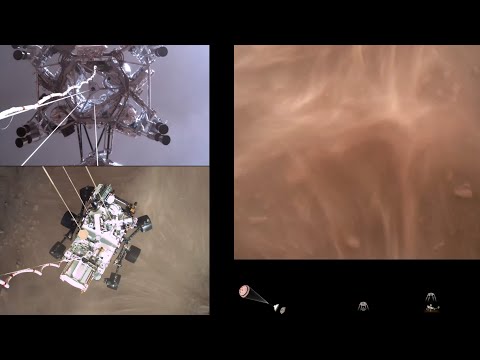
"Mars has been flown by, orbited, smacked into, radar-examined, and rocketed onto, as well as bounced upon, rolled over, shoveled, drilled into, baked, and even blasted. Still to come: bidirectional sample exchange and human trafficking."— The Planetary Society, on decades of Mars exploration

Welcome to Mars. Before you build anything, you need to understand the world you are standing on. This is not Earth. Every assumption you have about air, temperature, weather, and gravity is wrong here.
Atmosphere: Mars's atmosphere is 95% carbon dioxide, 2.6% nitrogen, with traces of oxygen and argon. Earth's atmosphere is 78% nitrogen, 21% oxygen. You cannot breathe outside. The atmospheric pressure is roughly 1% of Earth's — at sea level on Mars, the air pressure is equivalent to standing at 100,000 feet altitude on Earth. Your blood would boil without a pressurized suit.
Temperature: The average surface temperature is -80°F (-62°C). The range swings from -220°F (-140°C) at the poles in winter to 70°F (20°C) at the equator in summer. A single Martian day can see a 170°F temperature swing.
Dust storms: Mars has the most violent dust storms in the solar system. Regional storms happen frequently; global storms can envelope the entire planet for months, blocking sunlight and coating everything — including your solar panels.
Gravity: Mars gravity is 38% of Earth's. A 150 lb person weighs 57 lbs on Mars. This affects everything: how you walk, how you build, how fluids flow in your body, and how plants grow.
No magnetic field: Unlike Earth, Mars has no global magnetic field. Solar radiation and cosmic rays hit the surface directly. Radiation exposure is a constant threat — roughly 2.5x what ISS astronauts experience.
Geology: Olympus Mons is the tallest volcano in the solar system (72,000 feet — nearly 3x Everest). Valles Marineris is a canyon system stretching 2,500 miles — the width of the continental United States. Water ice exists at the poles and underground.
Sol vs. Day: A Martian sol is 24 hours and 37 minutes. Close enough to Earth that your body clock can adapt, different enough that after 30 sols you are a full day ahead of Earth's calendar.
Here is the simplest way to understand the Mars atmosphere: if Earth's atmosphere is a thick winter coat, Mars has a tissue paper t-shirt. Earth's atmosphere pushes down on you at 101,325 Pascals. Mars? Just 610 Pascals — less than 1% of that. That is why your habitats must be pressurized. Without pressurization, the water in your body would literally boil at Mars surface conditions — not because it is hot, but because the air pressure is so low that water's boiling point drops below body temperature.
This also means you cannot just "step outside for fresh air." Every time someone exits the habitat, they go through an airlock, wear a full pressure suit, and carry their own atmosphere on their back. A single crack in a habitat wall is not an inconvenience — it is a countdown to death. Understanding this environment is the first survival skill on Mars.
Mars Weather Report
Design a "Mars Weather Report" for one Martian sol. Include: temperature high/low, wind speed and direction, dust conditions (clear/hazy/storm), radiation index (low/moderate/high/extreme), and a recommendation for EVA safety. Use the data from the Learn It section to make it realistic.

"Antarctica is where you learn that the most important survival skill isn't technical — it's the ability to live and work with the same small group of people in an isolated, hostile environment for months on end."— Antarctic winterover researchers

You cannot live on the surface of Mars unprotected. Your habitat is not a building — it is a spacecraft that happens to sit on the ground. Every system must work or people die. Here is what you need to build and maintain:
Habitat design: Pressurized modules with airlocks, radiation shielding (regolith piled on top, or water walls), thermal insulation against -80°F nights, and redundant seals. Every door, window, and connection point is a potential failure point.
ISRU — In-Situ Resource Utilization: The game-changer. Instead of shipping everything from Earth, you make what you need from Mars itself. MOXIE technology splits CO2 into oxygen and carbon monoxide — breathing air from the atmosphere. Water extraction from underground ice or hydrated minerals. Fuel production (methane + liquid oxygen) from the Martian atmosphere using the Sabatier reaction. This is not science fiction — MOXIE ran successfully on Perseverance.
Power systems: Solar panels work on Mars but produce roughly 40% of what they produce on Earth (Mars is farther from the Sun). Global dust storms can reduce output by 90% for weeks. Nuclear RTGs (Radioisotope Thermoelectric Generators) provide constant power regardless of weather — Curiosity has been running on one since 2012. A colony needs both.
Food production: Hydroponics (growing in nutrient water), aeroponics (growing in mist), and pressurized greenhouse modules. Martian soil (regolith) contains toxic perchlorates that must be washed out before use. Growing food on Mars is possible but requires meticulous engineering and constant monitoring.
Closed-loop systems: Everything gets recycled. Water, air, waste, packaging — nothing is trash on Mars. A closed-loop life support system recycles 90%+ of water and converts CO2 back to oxygen. The ISS already does this; Mars takes it further.
3D printing: You cannot order replacement parts from Earth (6-9 month delivery time). 3D printers using Martian regolith, recycled plastics, and metal powders can manufacture tools, building components, and medical supplies on-demand.
Communication delay: Signals take 4-24 minutes one way between Mars and Earth, depending on orbital positions. No real-time conversation. No live tech support. The colony must make autonomous decisions. This requires training, trust, and established protocols.
Think of your habitat as a terrarium the size of a house — everything must be recycled. On Earth, you flush the toilet and the water "goes away." On Mars, there is no "away." That water gets filtered, purified, and comes back as your drinking water. The CO2 you exhale gets split back into oxygen. Your food waste gets composted into nutrients for the hydroponic gardens. Even your sweat gets collected and recycled.
This is called a closed-loop life support system, and it is one of the most important engineering challenges in human history. The ISS already recycles about 90% of its water. A Mars habitat needs to hit 98% or higher because resupply is 6-9 months away. Here is the connection to Earth: every closed-loop system we perfect for Mars is a blueprint for sustainable living on our home planet. Water recycling for drought-stricken communities. Air purification for polluted cities. Zero-waste systems for towns drowning in landfill. Mars forces us to solve problems we have been ignoring on Earth.
Hydroponic Experiment
Design a small hydroponic system using household materials — a plastic container, net cups (or cut-up plastic cups), an aquarium air pump, nutrient solution (or diluted liquid fertilizer), and seeds (lettuce, basil, or radishes work well). Grow something. Track growth rate (height per day), water usage (mL per day), and yield (grams harvested). Document with photos.
Mars constraint challenge: Try growing with limited light (6 hours instead of 12) to simulate Mars solar conditions. Compare growth rates.

The first Mars colony will not be built by astronauts alone. It will be built by the same careers that build communities on Earth. Every single career family you have explored across all five phases has a role on Mars:
Build habitats, lay foundations, assemble modules
Wire power grids, maintain solar arrays
Water recycling systems, waste processing
Atmosphere control, temperature, humidity
Hydroponic food production, greenhouse ops
Medical care, surgery, emergency response
Education for crew children, ongoing training
Morale through food, nutrition management
Rover maintenance, equipment repair
Communications, network systems, data
Wellbeing, mental health, crew cohesion
Culture, morale, human expression
Organization, scheduling, logistics
Safety protocols, emergency procedures
Building a Mars colony is like building a small town from scratch — except there are no roads leading to it, no Amazon deliveries, no calling 911, and no running to the store when you run out of something. Governance, supply chains, education, healthcare, conflict resolution, entertainment, sanitation — all of it has to happen with whatever and whoever you brought with you.
Think about your school for a moment. There are teachers, administrators, custodians, cafeteria staff, nurses, counselors, IT technicians, bus drivers, and security. Remove any one of those roles and the whole system starts to break down. Now imagine that same complexity, but you also need Habitat Engineers keeping the walls pressurized, Water Recycling Technicians keeping you hydrated, Agricultural Scientists keeping you fed, and a Governance Coordinator making sure disagreements do not turn into crises. Every person is essential. Every career matters.
Mars Colony Mapping Challenge
Map your school or neighborhood to a Mars colony. Walk around and identify every career you can see evidence of: who built these walls? Who wired the lights? Who maintains the HVAC? Who cooks the food? Who keeps people healthy? Who teaches? Who keeps things organized? Make a list of every career and mark which ones already exist in your community and which ones would be missing on Mars.
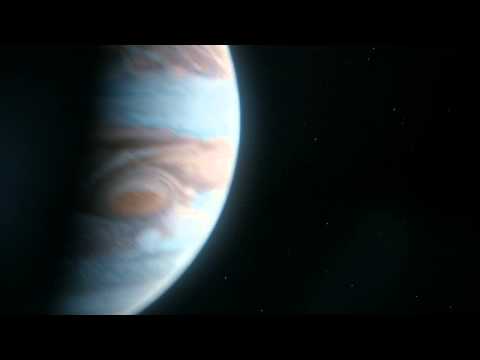
"Look again at that dot. That's here. That's home. That's us."— Carl Sagan, Pale Blue Dot, 1994

This is the promise fulfilled. Every technology you build for Mars makes life better on Earth. This is not a side effect — it is the point. The Mars mission is not about leaving Earth. It is about saving it.
| Mars Technology | Earth Application | Who Benefits |
|---|---|---|
| ISRU (O2 from CO2) | Clean energy, carbon capture | Communities fighting climate change |
| Water extraction | Water purification for developing nations | 780M+ people without clean water |
| Habitat design | Sustainable housing, disaster shelters | Climate refugees, disaster survivors |
| Hydroponics | Urban farming, vertical farms | Food deserts, 23.5M underserved Americans |
| Closed-loop recycling | Zero-waste communities | Every city drowning in landfill waste |
| Telemedicine | Rural healthcare access | 60M+ Americans in healthcare deserts |
| Mental health protocols | Community wellness programs | Everyone facing isolation and burnout |
Here is something most people do not realize about going home from Mars: you cannot just leave whenever you want. Mars and Earth only line up for a good return trip every 26 months. This is called a launch window, and it is dictated by orbital mechanics — the same physics that governs every planet in the solar system. If you miss your window, you are staying on Mars for 2 more years. Period. No exceptions. No amount of fuel or willpower changes the math.
This means the decision to return is not just emotional — it is mathematical. A Communications Specialist coordinates the timing with Earth. A Power Systems Engineer ensures the return vehicle has enough fuel manufactured from Mars resources. And a Terraforming Researcher is already thinking about the long game — what if we could make Mars habitable enough that people choose to stay not because they are stuck, but because Mars has become a second home?
Mars-to-Earth Innovation Proposal
Choose one Mars technology from the table above. Research a specific problem in YOUR community that this technology could address. Write a proposal: What is the problem? Who is affected? What Mars technology applies? How would you implement it? What would it cost? Who benefits? This is real. These technologies exist. Your community needs them now.

"This is it. Everything you have learned across 25 cards and 5 phases comes down to this moment. A habitat breach. A medical emergency. A communication blackout. Three crises, layered on top of each other. You will use your knowledge of body systems, spacecraft systems, Mars environment, careers, and teamwork to survive. You are not a student anymore. You are a Marstronaut." — Dr. Rob
This simulation is going to throw three crises at you simultaneously — and that is exactly how real emergencies work. On Mars, problems do not politely wait in line. A habitat breach can cause a medical emergency. A medical emergency can overwhelm your Emergency Medical Technician. A communication blackout means your Communications Specialist cannot call Earth for help. Everything cascades.
Here is my advice: do not panic. Triage. What kills you first? The habitat breach — because everyone loses atmosphere. Fix that first. Then treat the medical emergency. Then deal with communications. Prioritization is the difference between a crew that survives and a crew that does not. You have trained for this across 25 cards. Trust your training. Trust your crew. You are ready.
🎯 Colony Crisis Simulation
Layer 1: Habitat breach — a micrometeorite strike has cracked a pressure seal. You need systems knowledge to locate and repair it before atmosphere loss becomes critical.
Layer 2: Medical emergency — a crew member collapses during the breach. Decompression sickness? Cardiac event? You need crew health knowledge to triage and treat while the breach is being repaired.
Layer 3: Communication blackout — Earth comms go dark. Solar conjunction. No help is coming. Your team must make every decision autonomously. Trust, training, and teamwork are all you have.
Successfully resolving all three layers earns the title: CERTIFIED MARSTRONAUT™
Launch Final Simulation →After completing the simulation, return here to mark Phase 5 complete and trigger your graduation ceremony.