PHASE 2: FLIGHT SCHOOL
You are a citizen of the world. You represent the best people on Earth. Now prove it. Flight School takes you deeper into the science, the systems, the careers, and the connections that will get you — and humanity — to Mars.
FLIGHT SCHOOL MODULES

"For all its material advantages, the sedentary life has left us edgy, unfulfilled. Even after 400 generations in villages and cities, we haven't forgotten. The open road still softly calls."— Carl Sagan, on why humans explore

The STEM foundation for spaceflight begins here. You already know your body is the spacecraft — now learn the physics that makes the spacecraft fly.
Newton's Three Laws of Motion — not from a textbook, but from a launchpad. First Law: an object at rest stays at rest (that rocket weighs 6 million pounds and it is NOT moving until something pushes it). Second Law: Force = Mass × Acceleration (more thrust means more acceleration, but more fuel means more mass — the rocket equation is brutal). Third Law: every action has an equal and opposite reaction (that exhaust shooting down is what pushes the rocket up).
Forces in flight: Thrust vs. weight (can it leave the ground?). Drag vs. velocity (can it get through the atmosphere?). Once in space — no drag, no air resistance, just the laws of orbital mechanics governing every move.
Orbital mechanics basics: Why doesn't the ISS fall down? (It IS falling — it's just moving so fast sideways that it keeps missing the Earth.) What is a Hohmann transfer orbit? (The energy-efficient highway from Earth to Mars.) Why can we only launch to Mars every 26 months? (Orbital alignment — the launch window.)
Atmospheric science: Earth's atmosphere is 78% nitrogen, 21% oxygen, 1% other. Mars? 95% carbon dioxide, 2.6% nitrogen, traces of oxygen. That difference is everything.
👩🚀 Ask Maria for more detail...Think of orbital mechanics like throwing a ball so fast that it keeps falling but never hits the ground — that is literally what the ISS does at 17,500 mph. The reason we can only launch to Mars every 26 months is the same reason you time a jump onto a moving merry-go-round: you have to wait until it swings close enough. And the rocket equation? It is brutal because every pound of fuel you add to carry more fuel adds MORE weight, which needs MORE fuel. It is like packing for a trip where your suitcase gets heavier every time you add a sock.
🚀 Interactive Modules
Go deeper into the science of flight with these hands-on experiences:
🎮 Flight Simulator — From Hot Air Balloons to Rockets → 🎯 History of Flight Bingo — 16 Pioneers Who Made the Stars Reachable →Newton's Laws Lab
Three quick experiments you can do right now:
Third Law — Balloon Rocket: Inflate a balloon, tape it to a straw on a string, let it go. The air shoots one way, the balloon rockets the other. Measure distance traveled with different balloon sizes.
Second Law — Mass vs. Acceleration: Roll different-mass objects down the same ramp. Same force (gravity), different masses. Record which accelerates faster. F = ma in action.
First Law — Penny on a Card: Place a card on a cup, penny on the card. Flick the card. The penny drops straight into the cup — it was at rest and wanted to stay at rest.
Mars Weight Calculator
If Mars gravity is 38% of Earth's, enter your weight to see what you'd weigh on Mars:

Every spacecraft runs on systems — just like your body runs on organ systems. In Ground School you learned the body. Now learn the machine that carries the body.
The 16 Spacecraft Systems are the essential technologies that keep astronauts alive and on course. For each system you will learn: what it does, what happens if it fails, what it looks like (real NASA imagery), what Earth technology uses the same principle, and what career designed and built it.
→ Avionics Engineer
→ Propulsion Engineer
→ Env. Systems Engineer
→ Communications Tech
→ Mechanical Engineer
→ Materials Scientist
→ Software Engineer
→ Thermal Engineer
→ Optical Engineer
→ Chemical Engineer
→ Health Physicist
→ RF Engineer
As you master each system, its icon lights up on your tracker. When all 16 are lit, you have instrumentation clearance.
👩🚀 Ask Maria for more detail...Here is the thing people miss about spacecraft systems: they are all connected, just like your body. If the ECLSS (life support) fails, it does not just mean the air goes bad — it means the crew gets foggy, makes bad decisions, and suddenly the GNC (guidance) system is effectively broken too because the humans running it cannot think straight. Every system depends on every other system. That is why redundancy — having backups for your backups — is not paranoia, it is survival. Your school HVAC, your car engine, your phone battery — all the same principle, just different stakes.
Systems Matching Challenge
Match real-world scenarios to their spacecraft system:
"Your car GPS stops working" = GNC
"The air conditioning breaks in August" = ECLSS
"A surgeon uses a robotic arm" = DOCK principles
"Your phone connects to a cell tower" = COMM
"A hard hat protects a construction worker" = TPS principles
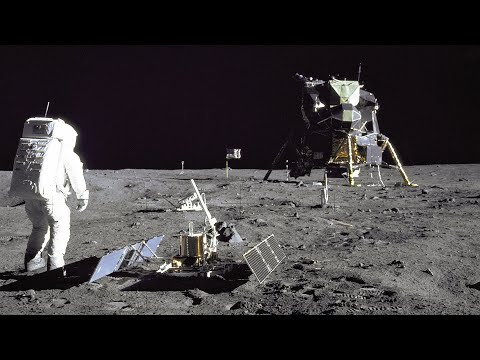
"Houston, we've had a problem."— Jack Swigert, Apollo 13, April 13, 1970

Flight School opens the full career landscape — not just the glamorous jobs, but the essential ones. Every rocket that has ever launched was touched by hands in the trades. Not one engineer's design gets off the paper without a machinist who can fabricate it to a thousandth of an inch.
Here is something most people do not realize: for every astronaut who goes to space, roughly 10,000 people on the ground make that possible. And most of those people are NOT scientists or engineers — they are welders, electricians, truck drivers, nurses, cooks, and quality inspectors. The "glamour jobs" get the headlines, but the trades are the backbone. A machinist who can fabricate a part to within one-thousandth of an inch is just as essential as the engineer who designed it. Do not let anyone tell you a career is "less than" because it does not require a four-year degree.
🧭 Your Career Compass Says...
Your Career Compass results from Ground School guide which interviews to start with — but you can explore any career family. The honest conversations about pay, training, daily work, and what professionals wish they'd known will surprise you.
Review My Career Compass →🧠 Essential Skills for Every Career
No matter what career you choose, these skills determine your success. Each module is a hands-on interactive experience:
🔍 Critical Thinking Skills Trainer — 4 Lenses + SMART Reality Test → 💪 Adapt, Improvise, Overcome — Resilience Simulator → 🌱 Leave It Better Than You Found It — Stewardship Tracker → 🎤 The Interview Coach — STAR Method + Mock Interview →Career Exploration Choice Board
Option A: Real Interview — Interview a professional in one of these career families (in person, phone, or video). Use the structured interview guide: What's the job? What training? Favorite part? What don't you like? Pay? Advancement?
Option B: Site Visit — Visit a workplace: factory, hospital, fire station, airport, construction site, auto shop, machine shop, server room. Write a field report.
Option C: Job Shadow — Spend time observing a professional at work through a Mission Partner connection.

The Dual-Use Principle at scale. Every spacecraft system, every piece of space technology, every mission protocol has an Earth application that benefits real people right now:
| Space System | Earth Application | One Health Impact |
|---|---|---|
| O₂/CO₂ cycling | Respiratory health, forest carbon cycles | Clean air = fewer asthma attacks, fewer ER visits |
| Water recycling | Clean water access, conservation | 780M people lack clean water globally |
| Crew mental health | Community mental health, belonging | Isolation and burnout are epidemic |
| Food production | Urban farming, food security | Food deserts affect 23.5M Americans |
| Radiation protection | Cancer prevention, workplace safety | Same principles protect radiology workers |
| HVAC in sealed habitat | Healthy buildings, hospitals, schools | Tucson needs HVAC technicians right now |
The Dual-Use Principle is one of the most powerful ideas you will ever learn. NASA did not set out to invent baby formula, memory foam, or water purifiers — but all of those came from space research. When you solve a problem for the extreme environment of space, you accidentally solve it for millions of people on Earth. Think about it: if you can recycle water in a sealed spacecraft where every drop counts, you can bring clean water to a village that has never had it. That is not a side effect of space exploration — that is the whole point.
🤖 Technology & Me: Your Body IS the First Machine
Every spacecraft system was inspired by something your body already does:
You already built your body in the Vehicle Assembly Building. Now see how every system you learned about maps to the spacecraft that carries you to Mars.
🌍 One Crew, Many Cultures
A Mars crew will represent humanity. The people who built the path to space came from every culture: the Montgolfiers (France), Tsiolkovsky (Russia), the Tuskegee Airmen (African American), Katherine Johnson (mathematician who broke racial barriers), Valentina Tereshkova (USSR), Samantha Cristoforetti (Italy), and crew from 15+ nations aboard the ISS. Understanding and respecting different cultures is not a nice-to-have — it is mission-critical.
🎯 Explore the pioneers in the History of Flight Bingo →Innovation Proposal
Choose one space technology from the table above. Investigate how it could improve something specific in your own community. Research it. Write a 1-page pitch: what is the problem, what is the space technology, how would you apply it locally, who benefits?
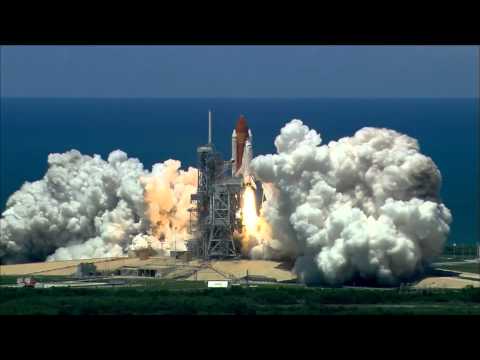
"The thing I'll remember most about the flight is that it was fun. In fact, I'm sure it was the most fun that I'll ever have in my life."— Sally Ride, first American woman in space, STS-7 (1983)

"You've learned the science. You've studied the systems. You've explored the careers. Now let's see if you can handle real mission pressure. Flight School isn't about memorizing facts — it's about making decisions when things go wrong. And in space, things always go wrong." — Dr. Rob
The Mars Climate Orbiter was a real spacecraft that NASA lost in 1999 because one team used metric units and another used imperial — a $327 million mistake caused by a unit conversion error. That is not ancient history; that is a lesson about communication, attention to detail, and why every single person on a team matters. In this simulation, you will face that kind of pressure. Remember: there are no trick questions. Every crisis has a logical solution based on what you learned in Cards 2.1 through 2.4. Trust your training.
🎯 Navigation Crisis Simulation
Three crisis layers: a navigation calculation error (the Mars Climate Orbiter lesson), a communication blackout during a critical maneuver, and a cyber intrusion attempt. Resolve all three to unlock Mission 1: Build the Rocket.
Launch Simulation →After completing the simulation, return here to mark Flight School complete and unlock Phase 3.
